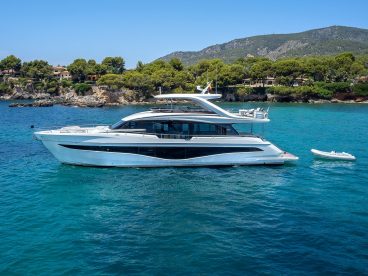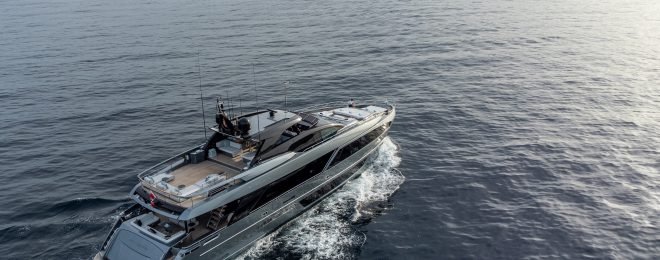

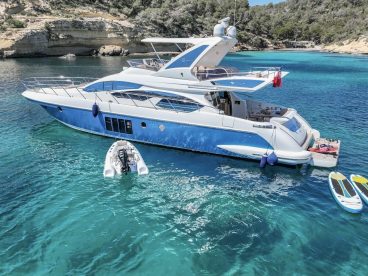
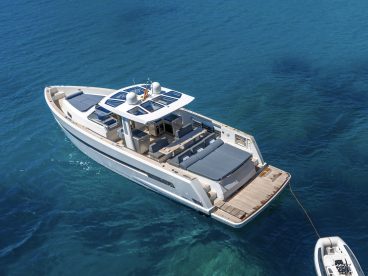
Azimut 64
2013 19,08
€995.000
14.10.26
Nigel Wales, Managing Director of Arrival Yachts, has returned from a Balearic Marine Cluster trade mission to the Netherlands, where a delegation from Mallorca’s marine sector visited some of the most respected names in Dutch yacht building, refit, specialist equipment and industry advocacy.
For Nigel, the trip was more than a tour of famous shipyards. As the MD of Arrival Yachts, a yacht brokerage in Mallorca, and with his background as a naval architect, Nigel was looking at the Dutch superyacht industry through a very particular lens: quality, technical thinking, serviceability, owner experience, captain confidence and long-term value.
The trade mission brought together businesses from across the Balearic marine sector, connecting Mallorca-based professionals with Dutch shipyards and suppliers at the top of the international superyacht market. Over the course of the visit, the group spent time with SYBAss, Feadship, Oceanco, Vitters, Balk Shipyard and Akerboom Yacht Equipment, gaining an insight into how the Netherlands continues to hold such a powerful position in global yacht building.
For Arrival Yachts, the experience was directly relevant to the company’s work in yacht sales Mallorca, superyachts Mallorca and advising clients who are buying a yacht Mallorca or considering future ownership, sale or refit.
Nigel says the value of the trip came from seeing the thinking behind the finished yacht.
“One of the reasons I particularly wanted to join this trip was to understand what the Dutch yards are doing differently. You can look at a yacht in a brochure, or you can walk around a finished yacht at a boat show, but that only tells you part of the story. What I wanted to understand was the philosophy behind these businesses. How do they approach quality? What do they think about the captain and crew? How do they build for the long term? Those are the things that matter when you are advising owners and buyers properly.”
Mallorca is one of the most important yachting hubs in the Mediterranean. It is home to owners, captains, crew, refit specialists, marina operators, suppliers, brokers and marine service businesses working across every level of the sector.
For Nigel, connecting Mallorca’s marine expertise with the Dutch yacht-building world made complete sense.
“Mallorca is a very sophisticated yachting market. We have an incredible concentration of knowledge here, from captains and engineers to service companies, refit specialists, marinas, yacht support and brokers. But we cannot work in isolation. The yachts that come to Mallorca, sell through Mallorca, operate from Mallorca or refit here are connected to shipyards and suppliers all over Europe and beyond. So it is very useful to go and spend time with the people who are building and supporting some of the best yachts in the world.”
The delegation included Pedro Suasi and Cristina Briz from the Balearic Marine Cluster, alongside representatives from companies including BWA, Club de Mar, Evolution Yacht, Heavy Seas, INFE Proyectos, IPM Group, J2 Sailing, JJ Covers, Lantimar, Nautipaints, Ocean Capital and IGY, OmniAccess and Pinmar.
Nigel says the networking within the group was also one of the most valuable parts of the experience.
“The yards were obviously the focus, but travelling with the Balearic delegation was also very useful. There were people from different parts of the marine sector, all looking at the same visits from slightly different angles. That is when the conversations become interesting. A captain, a marina representative, a paint specialist, a yacht support company and a broker may all notice different things, and that gives you a richer understanding of what you are seeing.”
For Arrival Yachts, that broader view is part of the company’s positioning as a yacht broker offering personalised service to Mallorca, “A good yacht broker should not just be thinking about the sale. The sale is one part of a much bigger ownership picture. If someone is buying a yacht in Mallorca, they need to understand the builder, the condition, the likely maintenance profile, the refit implications, the technical systems, the crew’s view and the future resale value. That is where a more personal, informed approach becomes important.”
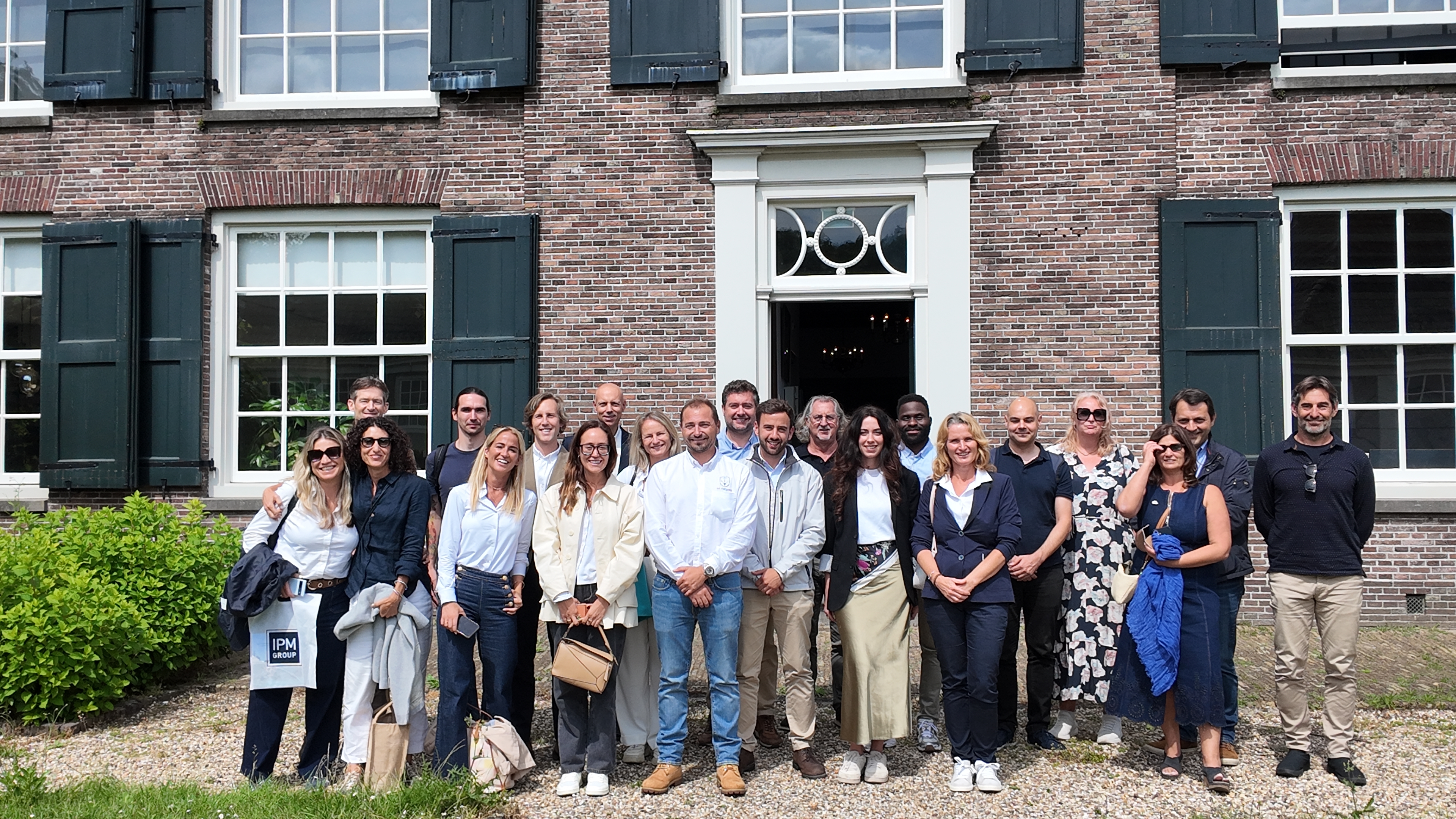
The first major stop was SYBAss, the Superyacht Builders Association, where the delegation heard about the work being done by SYBAss, the Builders Advocacy Campaign, the Superyacht Life Foundation, World Boating Day and the Water Revolution Foundation.
The visit included input from people including Sarah Costa, Membership Manager at SYBAss, and Dilan Sarac, Executive Director at The Superyacht Life Foundation.
For Nigel, this was a useful place to begin because it placed the shipyard visits into a wider context.
“SYBAss was a very interesting starting point because it reminded us that the future of yachting is not only being shaped inside the shipyards. It is also being shaped through regulation, advocacy, public perception, sustainability work and collaboration between builders.”
One issue that stood out was the relationship between superyachting and regulation.
“Superyachts are often affected by rules that come from the commercial shipping world, but yachts are not commercial ships in the normal sense. The way they are designed, built, operated and crewed is very different. So the industry needs strong representation. It needs people who can explain those differences and help make sure regulation is informed by how yachts are actually used.”
Sustainability was another major theme. Nigel was particularly interested in the work around YETI, the Yacht Environmental Transparency Index, and the industry’s attempts to measure environmental impact in a more structured way.
“There is a lot of talk about sustainability in yachting, but what matters is turning that talk into something measurable and useful. YETI is interesting because it is an attempt to look at the environmental impact of a yacht and its operation in a more structured way. That is important because owners, captains, builders and brokers all need clearer information. It is not enough to say something is greener. We need to understand what that actually means.”
He also noted that the move towards lower emissions and more responsible yacht building is not simple.
“Everyone wants to talk about net zero, but the reality is complex. You are dealing with metals, composites, timber, supply chains, fuel availability, batteries, operations, infrastructure and owner expectations. There is no magic switch. But there is a concerted effort, and that matters.”
For Arrival Yachts, the relevance is clear. Buyers are asking more detailed questions about efficiency, future regulations, alternative fuels, systems and long-term operation.
“If you are advising someone on yacht sales in Mallorca, or helping a client who is buying a yacht in Mallorca, you need to understand where the industry is going. Sustainability is not just a marketing phrase. It is going to affect design, operation, maintenance, regulation, resale and ownership decisions.”
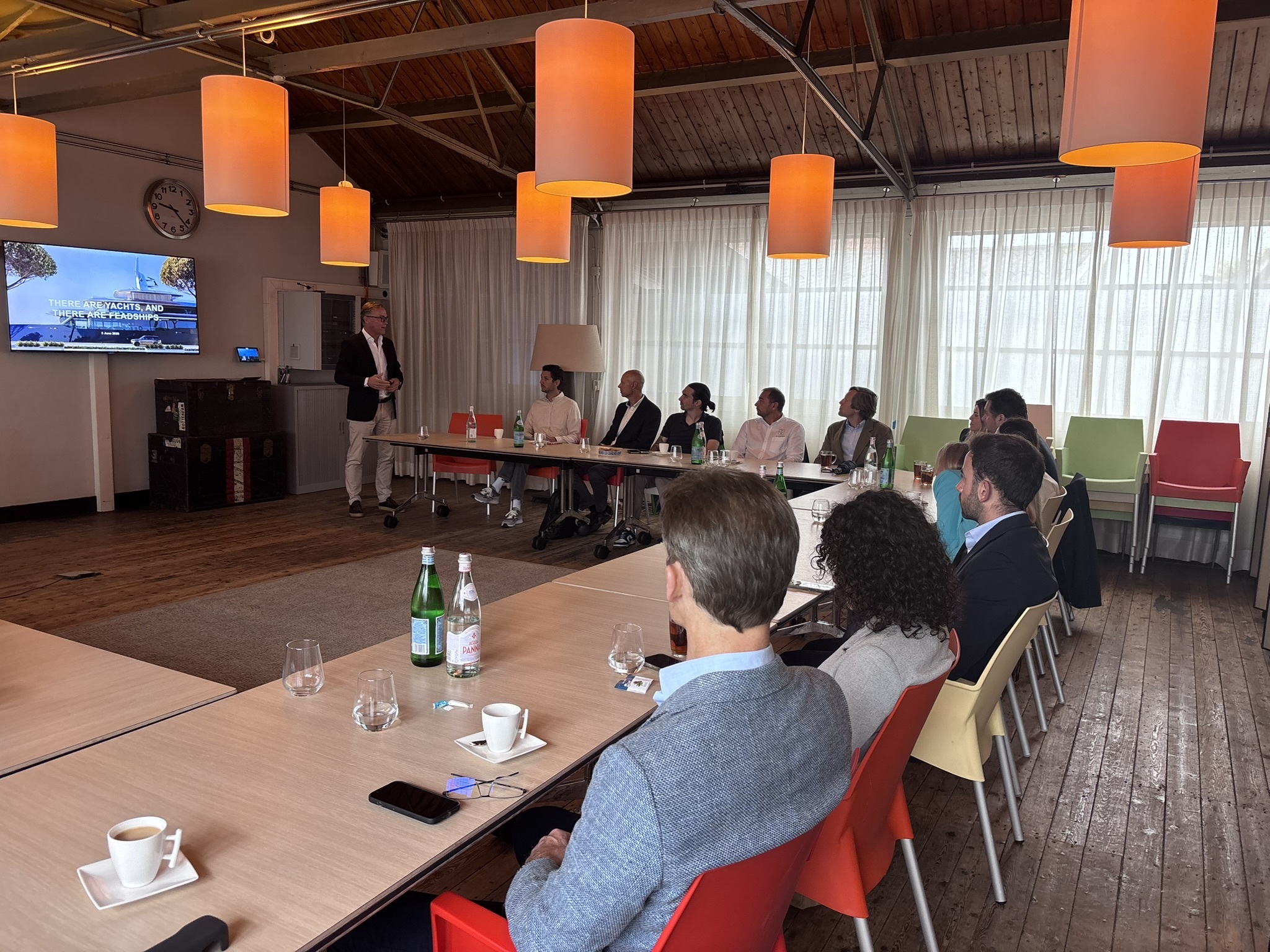
Feadship Aalsmeer was one of the most anticipated visits of the trade mission. The group spent time with Feadship representatives, including Pier Posthuma de Boer, Sales Director at Feadship, and was given an insight into the yard’s philosophy, technical approach and long-term thinking.
For Nigel, Feadship made a strong impression.
“Feadship has that reputation for being one of the finest yacht builders in the world, but seeing how they think was the most interesting part for me. It is not just about the finish or the name. It is about the depth of their approach.”
What stood out most was the culture of going beyond “good enough”.
“You get the sense that ‘good enough’ is not really part of the Feadship culture. Where another yard might say, ‘that will do’, Feadship seems to ask how it can be made better, stronger, more reliable, more serviceable and more valuable in the long term.”
Nigel’s naval architecture background makes him particularly interested in what sits beneath the visible design.
“My eye naturally goes to the systems, the structure, the engineering access, the hydraulics, the electrics, the serviceability. A yacht can look beautiful, but if it is difficult to maintain, or if the systems are not properly thought through, the owner and crew will feel that for years.”
One of the key observations from the Feadship visit was the amount of technical work they keep within their own ecosystem.
“What impressed me was how much control they kept over the build. They are making and fitting so much of the technical equipment themselves: hydraulics, electrics, winches, motors, doors, hatches, windows and moving systems. That gives them a level of control which is very significant.”
For captains and crew, this can make a major difference.
“A yacht is not judged only on delivery day. She is judged every day afterwards. Can the engineer get to the system? Does the crew understand how it works? Has the yacht been designed with maintenance in mind? Can the yard support the vessel properly later? These things affect reliability, running costs, owner confidence and resale value.”
Nigel was also interested in the future-facing elements of Feadship’s work, including electric platforms, alternative fuels and the move towards lower-emission operation.
“What I found interesting was that Feadship is thinking very seriously about future propulsion and energy use. Electric platforms, HVO compatibility, lower-emission operation, these are not abstract ideas now. They are becoming part of the build conversation. But there is still a practical side. A captain has to operate the yacht in the real world, where fuel availability, infrastructure and owner expectations all have to be managed.”
For Arrival Yachts, the Feadship visit reinforced the importance of looking beyond the headline specification.
“When we advise clients, especially at this level, we have to look beyond the photographs. Who built the yacht? How was she built? How serviceable is she? How has she been maintained? What is the builder’s philosophy? That can make an enormous difference to the ownership experience.”
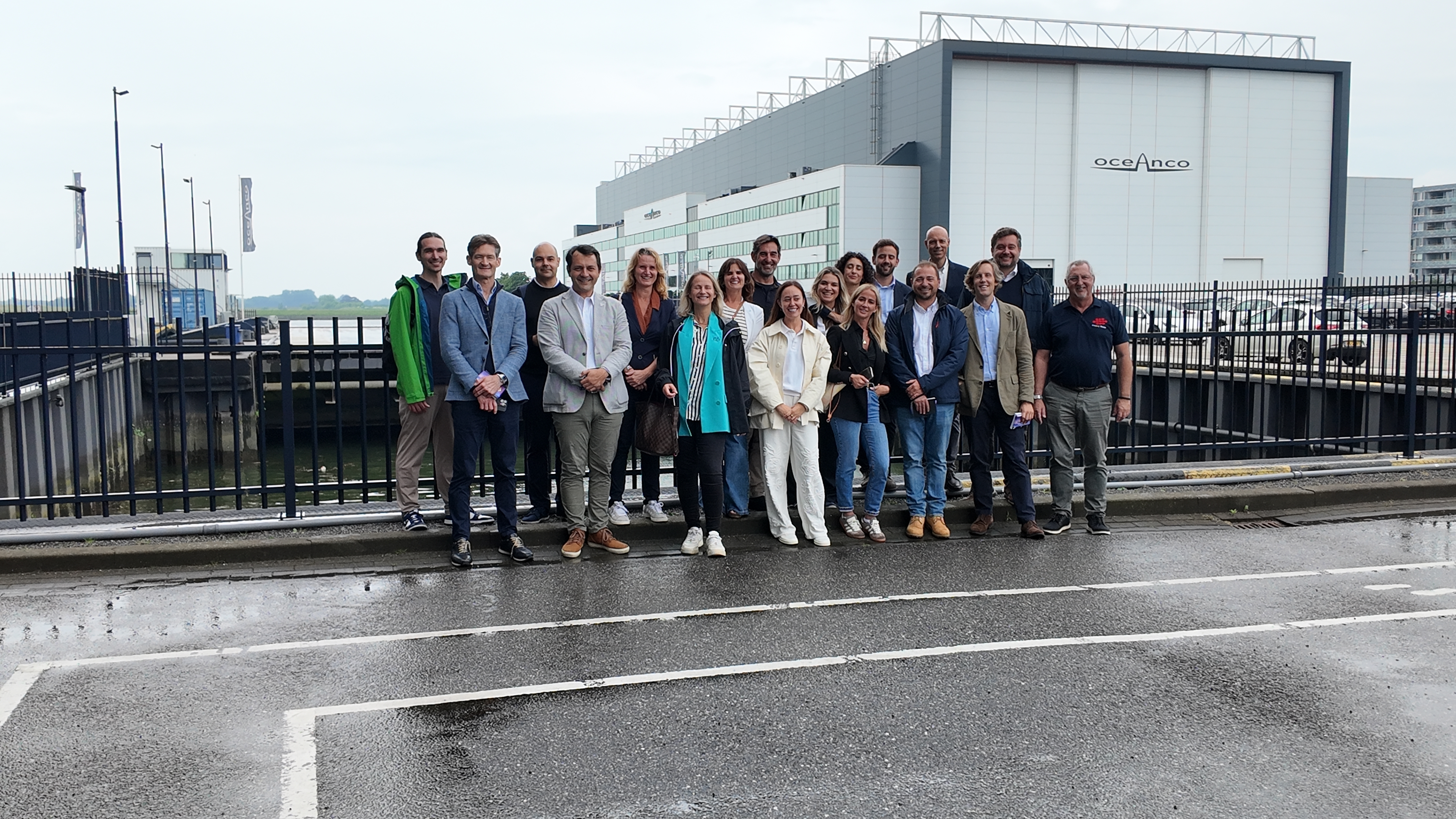
The Oceanco visit offered a very different energy. Where Feadship impressed through control, heritage and depth, Oceanco stood out for scale, ambition and the ability to manage enormous complexity.
The group met members of the Oceanco team, including Paris Baloumis, Director Strategic Alliances at Oceanco, and toured the facilities.
Nigel describes the experience as striking.
“Oceanco felt very ambitious. There was a real energy in the room. The team were sharp, open, curious and clearly used to working at a very high level. You could feel that they are comfortable with big ideas.”
The scale of the projects was one of the strongest impressions.
“These are not simple builds. At this level, a yacht is a huge project involving designers, engineers, subcontractors, suppliers, owner representatives, crew input and management teams. The challenge is not only to have a vision, but to organise that complexity so the finished yacht works.”
For Nigel, that ability to coordinate specialist teams is one of Oceanco’s strengths.
“Oceanco’s model is fascinating because they bring together so many different specialist companies and technical teams. That is not easy. You need a very high level of management to keep the whole project aligned, especially when the yachts are this large and this complex.”
From a captain’s perspective, this matters because build complexity becomes operational reality.
“When a yacht is delivered, the captain and crew inherit the decisions that were made during design and build. Crew workflow, access to systems, maintenance planning, noise, vibration, tender operations, guest movement, all of that depends on how well the project was integrated from the beginning.”
Nigel was also struck by the facilities themselves.
“Walking into a hall where a very large yacht is inside, in an immaculate controlled environment, really brings home the scale of what they are doing. It is not just the size of the yacht. It is the precision of the environment around it. Temperature, humidity, access, engineering, systems, everything has to be controlled.”
The experience reinforced the importance of looking at large yacht projects as whole operating systems.
“People often focus on size, but at this end of the market, size is only one part of the story. The real value is in how well the yacht has been conceived and managed. Does the vision translate into something that can be operated properly? Does it work for the owner, the guests and the crew? Oceanco appears to be thinking very carefully about those questions.”
For Arrival Yachts, the relevance to superyachts Mallorca is direct.
“Mallorca sees many of these large yachts in operation. The island is not just a beautiful cruising base. It is a major technical, operational and ownership hub. If you are advising clients here, you need to understand how these big yachts are built, supported and managed.”
Vitters Shipyard brought the conversation into the world of advanced sailing yachts, with Project Zero standing out as one of the most thought-provoking parts of the trip.
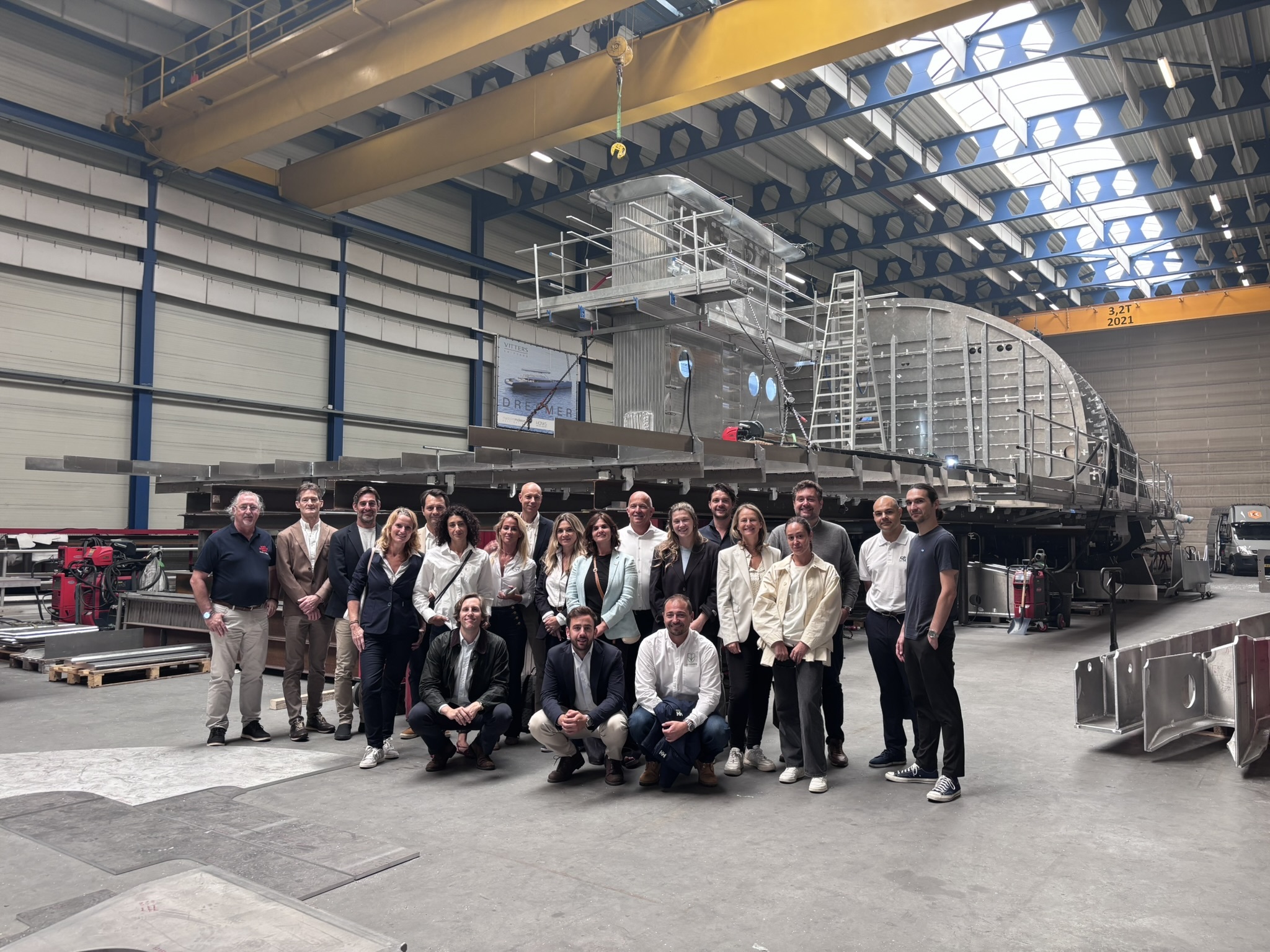
The delegation spent time with the Vitters team, including Bas Peute, Manager Sales and Marketing at Vitters Shipyard B.V.
For Nigel, Project Zero challenged many of the assumptions around large yacht operations.
“Vitters was fascinating because of Project Zero. This is a large sailing yacht designed without conventional combustion engines and without fuel in the traditional sense. That immediately changes the whole conversation.”
The idea of a large yacht operating around stored and regenerated energy creates a very different mindset for owners, captains and crew.
“With a normal yacht, you think in terms of fuel. With something like Project Zero, you are thinking about energy. How much do you have stored? How much can you recover? What is your operating plan? How do you manage the batteries? How do you plan departures and manoeuvres? It is a completely different way of thinking.”
Nigel says this is exactly the kind of project that makes the industry think harder.
“It raises practical questions, and that is why it is interesting. It is not just a romantic idea about sailing. It is about whether a very advanced yacht can be operated within a different set of constraints. The captain has to manage that. The owner has to understand that. The crew have to live with it.”
His naval architecture background made the project particularly interesting.
“From a technical point of view, I find it fascinating. Energy recovery, battery capacity, sailing efficiency, operational discipline, all of these things become central. Even if not every owner wants to go that far, projects like this influence the future. Ideas developed at the extreme end often filter into other yachts over time.”
For buyers, this is part of a broader shift.
“When someone is buying a yacht in Mallorca now, they are often more aware of efficiency, environmental impact and future regulations than buyers were in the past. That does not mean every client wants the most radical solution, but it does mean the questions are changing.”
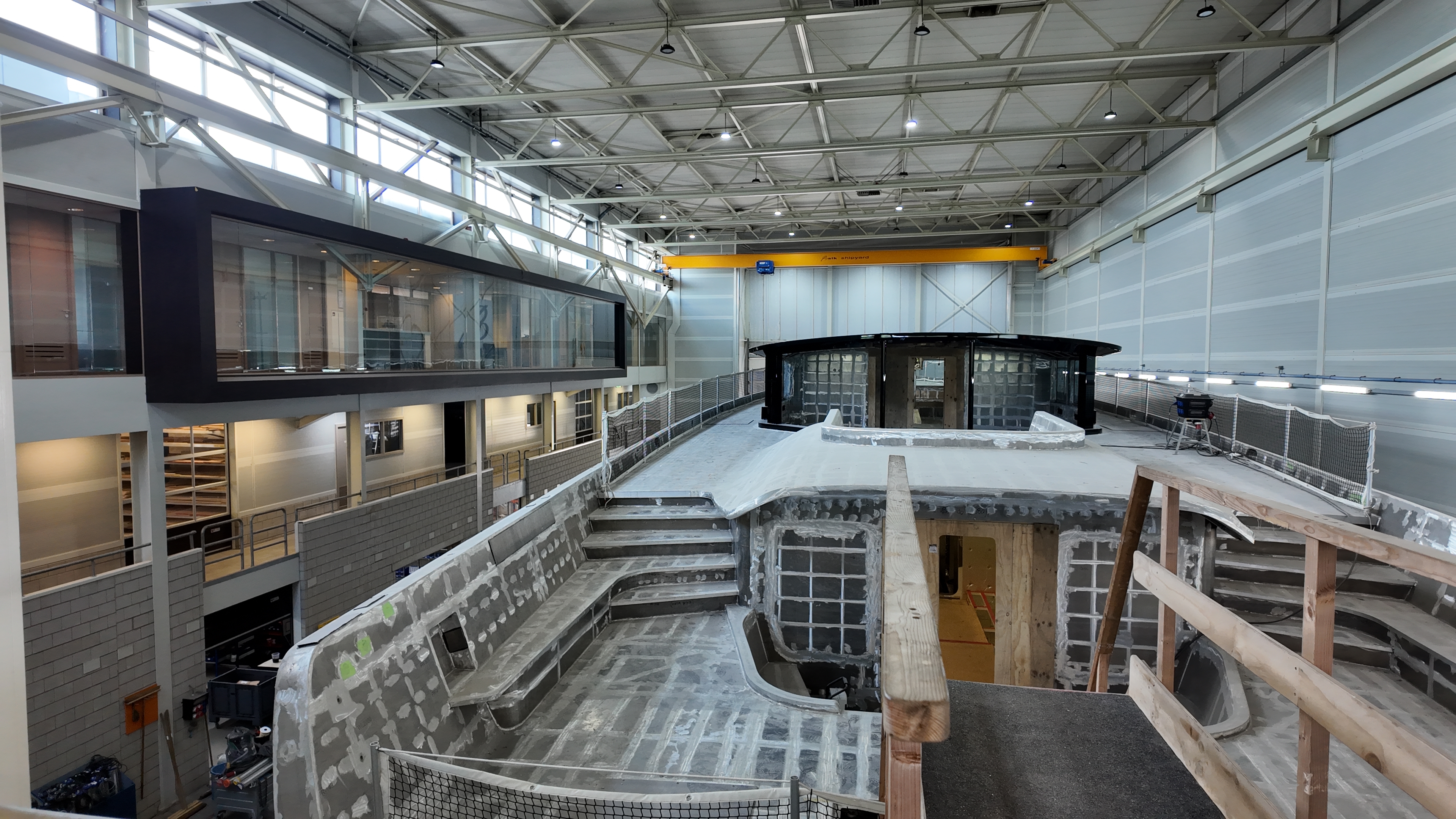
Balk Shipyard offered another perspective: not new build glamour, but serious refit, rebuild and long-term yacht value.
The group met the Balk team, including Allard Borleffs, owner of Balk Shipyard, together with Gabriëlle Bosman, Niels van Karsen, Evan Kortmann and Wouter van Rijn.
For Nigel, this was one of the most commercially relevant visits.
“Balk was very interesting because refit is such an important part of yacht ownership and yacht sales. Not every opportunity is a perfect yacht sitting ready to go. Sometimes the opportunity is a yacht with the right hull, the right pedigree or the right size, but she needs work.”
He sees refit as a strategic part of the buying conversation.
“A good refit yard can change the potential of a yacht. If the structure, size and basic platform are right, then an interior, systems upgrade or technical refit can make a yacht much more suitable for a new owner.”
Balk’s facilities and practical approach made an impression.
“What I liked about Balk was that it felt like a serious working refit yard. They can handle substantial yachts, and you get the sense that they understand high-quality refit work. That matters because a poor refit can create years of problems, while a good refit can protect and improve the value of the yacht.”
From a captain’s point of view, refit quality is fundamental.
“Captains know immediately whether a refit has been done properly. It affects reliability, access to systems, maintenance planning, downtime, crew efficiency and guest experience. A refit is not just cosmetic. It can change how the yacht operates.”
For yacht sales in Mallorca, this is especially relevant because many buyers are looking at pre-owned yachts.
“If a client is looking into buying, we may be looking at yachts that need some level of work. The important thing is to understand whether that work makes sense. What needs doing? What will it cost? Which yard can do it properly? Will the refit improve the yacht’s value and usability? Those are the questions that need to be asked early.”
This is where Nigel believes Arrival Yachts’ boutique approach adds value.
“As a yacht broker focused on personalised attention, we can take the time to look at the whole picture. We are not just saying, ‘Here is a yacht, do you like it?’ We are asking whether she fits the client’s plans, whether any refit is realistic, whether the numbers make sense and whether the final result will be worth it.”
The final visit was to Akerboom Yacht Equipment, where the delegation met Mervyn van der Ploeg, Managing Director at Akerboom.
Akerboom was different from the shipyard visits because its focus is specialist yacht equipment, including passerelles, doors, hatches, moving windows, frames and custom technical systems.
For Nigel, it was a reminder that yacht quality is often found in the details, “Akerboom was a very useful visit because it brought the focus down to the equipment and systems that make daily operation work. These may not be the headline features in a sales brochure, but for captains and crew they are incredibly important.”
He points to equipment such as passerelles, hatches and moving systems as examples of details that matter every day. “A passerelle that works properly, a hatch that opens cleanly, a platform that operates safely, a hydraulic system that is quiet and reliable, these things make a huge difference on board. Guests may only notice them when they go wrong, but captains and crew notice them every day.”
From a naval architecture perspective, this is part of the whole-yacht view, “These systems cannot be treated as afterthoughts. They have to be integrated into the yacht’s structure, operation, crew workflow, tender handling and maintenance plan. If they are not, they become problems later.”
For yacht buyers, this is another reason to look beyond the obvious. “When people view a yacht, they often focus on the interior, the deck spaces and the general feeling on board. Of course, that matters. But the technical systems and operational details matter just as much. They affect the ownership experience, the crew’s ability to do their jobs and the confidence a buyer can have in the yacht.”
The people and conversations that made the trip valuable
Beyond the shipyards and suppliers, Nigel says the people made the trade mission especially worthwhile.
“It was a very good group. I enjoyed meeting and spending time with people from across the Balearic marine sector. There were useful conversations with Pedro Suasi and Cristina Briz from the Balearic Marine Cluster, and with representatives from companies such as BWA, Club de Mar, Evolution Yacht, Heavy Seas, J2 Sailing, JJ Covers, Nautipaints, Ocean Capital and IGY, OmniAccess and Pinmar.”
He also valued the chance to connect with hosts and specialists across the Dutch side of the industry.
“Meeting people like Sarah Costa at SYBAss, Dilan Sarac from The Superyacht Life Foundation, Paris Baloumis at Oceanco, Pier Posthuma de Boer at Feadship, Bas Peute at Vitters, the Balk Shipyard team and Mervyn van der Ploeg at Akerboom was extremely useful. These are the conversations that help you understand how different organisations think.”
For Nigel, that relationship-building is not separate from brokerage. It is part of it.
“In yacht brokerage, relationships matter because knowledge matters. If you know the people, if you understand the yards, if you have seen the facilities and asked the questions, you are in a better position to advise your clients.”
The trade mission reinforced several themes that are central to the way Arrival Yachts works: technical understanding, long-term thinking, personal advice and informed decision-making.
Nigel believes that clients need more than access to listings, “Anyone can look at yacht listings. The value of a good broker is in helping a client understand what they are really looking at. Is the yacht well built? Is she suitable for the way the owner wants to use her? What will she cost to run? How has she been maintained? What will the captain think? What happens at resale? Those are the questions that matter.”
This is particularly true in the Mallorca market, “Mallorca attracts experienced owners, captains and buyers. It is a serious yachting hub. If you are involved in yacht sales in Mallorca, you have to bring a deep knowledge to the conversation.”
Nigel’s background as a naval architect is central to that approach. “I think my naval architecture background gives me a different way of looking at yachts. I am interested in what is behind the finish: the structure, the systems, the access, the design decisions, the practical operation. That helps when advising a client because the best yacht is not always the most obvious yacht.”
For Arrival Yachts, their approach to yacht sales means taking the time to understand both the client and the yacht. “We are a specialised yacht broker, and that is important. We are not trying to be the biggest. We are focused on giving careful, informed advice. For some clients that may mean finding the right yacht to buy. For others it may mean selling properly, assessing a refit opportunity, or understanding whether a particular yacht is the right long-term fit.”
The Dutch shipyards trade mission gave Nigel Wales and Arrival Yachts a valuable view into the thinking behind some of the world’s most respected yacht-building and marine businesses.
Each visit offered a different perspective. SYBAss highlighted the importance of advocacy, regulation, sustainability and industry collaboration. Feadship demonstrated the value of quality, control, serviceability and long-term thinking. Oceanco showed ambition, scale and the management of extraordinary complexity. Vitters challenged conventional ideas about sailing yacht operation through Project Zero. Balk Shipyard showed the strategic importance of high-quality refit. Akerboom highlighted the operational details that make yachts work properly every day.
For Nigel, the central lesson was clear: a yacht should never be assessed on appearance alone.
“The best yachts are not just beautiful. They are thought through. You see it in the engineering, the access to systems, the way the crew can work, the way the yacht can be maintained, and the way the builder has considered her long-term life beyond delivery.”
That perspective is especially important in Mallorca, where owners, captains, buyers and sellers are operating in one of the most active and sophisticated yachting markets in the Mediterranean.
“When someone is buying, selling or considering a refit, the advice they receive needs to go deeper than the listing. You need to understand the builder, the systems, the maintenance profile, the refit potential and how the yacht will actually work for that owner.”
For clients looking for a boutique yacht broker in Mallorca, that is where Arrival Yachts aims to make the difference: careful advice, technical understanding and a genuinely personal approach to yacht sales.
“This trip was a reminder that the real value of a yacht is not only in what you see. It is in the thinking behind her. And when you understand that, you can advise a client with much more confidence.”
Talk to us